
Response on the Road
When a serious collision happens, everything comes down to timing.
Emergency response still relies heavily on a call to 9-1-1. That call can take several minutes or not happen at all if someone is injured or unable to respond. Even when a call is made, the information shared can be incomplete or inaccurate, delaying help at the scene.
Those delays matter. Response times beyond 12 minutes have been shown to increase mortality by up to 46%, underscoring the critical importance of those first few minutes.
The Gap Between Collision and Response
Traditional emergency response systems depend on people to explain what happened, where they are, how severe the crash is, and whether there are injuries. Even with Automatic Collision Notification (ACN), which can place a call automatically, responders often still rely on voice communication to understand the situation.
This creates a clear gap between when a crash happens and when emergency responders have enough information to act.
Even as vehicle safety technology has improved, there’s still a major opportunity to improve what happens after a crash. Faster, more accurate information could significantly improve outcomes.
Moving from Alerts to Insight
This is where Advanced Automatic Collision Notification (AACN) changes things.
Instead of just triggering a call, AACN automatically sends crash data, such as location, severity, and potential injury insights, directly to emergency communication centers (ECCs). That means responders aren’t starting from zero or trying to piece things together over a call; they have context immediately.
This data can then be processed through systems that support dispatch, helping ensure the right resources are sent as quickly as possible.
Why NG9-1-1 Matters
AACN becomes even more effective when paired with Next Generation 9-1-1 (NG9-1-1).
These systems are designed to receive and process real-time data, allowing information from a crash to flow directly into call handling and dispatch systems. Instead of delays or limitations from legacy systems, NG9-1-1 helps make sure the data gets where it needs to go and fast.
Faster Data, Better Outcomes
When emergency responders have access to better information earlier, they can make faster, more informed decisions. They can prioritize more severe crashes, send the right level of response, and reduce the time it takes to get help on scene.
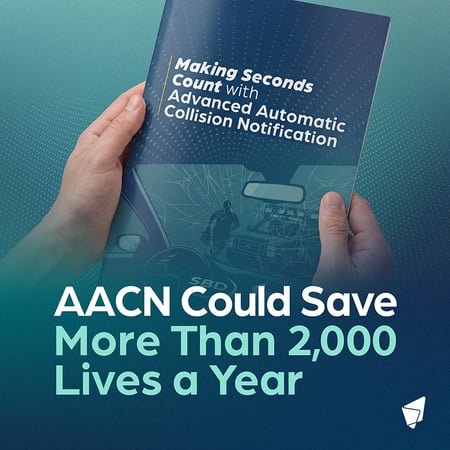
Reducing these delays could have a significant impact, potentially preventing over 2,100 deaths annually.
Closing the Gap
The biggest issue isn’t just detecting crashes anymore; it’s what happens in the moments right after. AACN helps close that gap by turning a delayed, manual process into a faster, data-driven one. It ensures that when a crash happens, responders don’t just know that something occurred; they understand the situation before they even arrive.
Because in emergency response, every second truly counts.
Read the AACN White Paper to Learn More!
Intrado. Always there in an emergency.
