
Calling 9-1-1 Across Three Countries: International Roaming & World Cup
No video selected
Select a video type in the sidebar.
This summer, millions of fans bounced between the US, Canada, and Mexico for the World Cup. Good news: 9-1-1 works the same everywhere: same number, dial it, get help. But what happens after you dial is different depending on which country you're in.
As we head into this weekend's final match between Argentina and Spain (and the third-place play-off between France and England), let's take a look at the real solution for what has been an ongoing international roaming problem.
Canada
Canada's 9-1-1 is way more centralized than ours. A handful of big carriers run the network in their region, and the government forces everyone to upgrade; there's a federal deadline (March 2027) to fully switch to the new NG9-1-1 system. As of a couple of months ago, over half the country was already on it.
A few facts:
- Call from an internet/VoIP phone, and it goes to a call center first to confirm your location before connecting you to the real dispatcher.
- They legally have to offer help in English AND French. For any other language, they bring in an interpreter.
- They can find you horizontally pretty well, but not vertically yet, so if you're on the 20th floor of a hotel, that part's still a work in progress.
Mexico
Mexico's story is basically the opposite. No big national deadline or mandate, every state does its own thing, funded partly by the state and partly by federal money. Some states have built advanced command centers, while others are way behind.
9-1-1 Details:
- Calls just ride on the regular phone network, not a dedicated 9-1-1 network.
- No texting 9-1-1 at all.
- Spanish is the default. If you don't speak Spanish, it really depends on luck whether whoever answers can help you.
- Mexico gets a lot of 9-1-1 calls (54 million in 2025!), but most aren't real emergencies; a lot are silent/accidental calls.
The World Cup Fix: Calling International Phones Back
If you're visiting the US with a foreign phone, your phone will still recognize 9-1-1 (or 112, or even your home country's emergency number) and route it as an emergency call, no matter where it was bought. That part already works fine.
The problem is calling that person back. Foreign phone numbers don't fit the US system's format, so up until now, when an international phone called 9-1-1, the dispatcher couldn't see the real number, just a placeholder number that's useless for a callback. If the call dropped, that was it.
Ahead of the World Cup, the major US carriers fixed this: they're now passing the caller's real international number through in a different field that the dispatcher's screen shows. So, if training catches up and 911 centers know to look for it, dispatchers can call international visitors back now. It's a small, unglamorous fix, but it's the real, concrete thing that rolled out specifically because of this tournament.
Why it all matters
Same number to dial everywhere, but three very different systems on the other end, and one quietly fixed callback problem that makes a difference for the millions of international fans in town this summer.
Our own CEO, Joe Custer, made a similar point in a recent interview before the tournament even started, he was reminding fans that their phone is often their fastest way to reach help, and encouraged international visitors to confirm their phone can access U.S. networks, know their venue's emergency contacts, and stay on the line (even without shared language) so translation support can kick in.
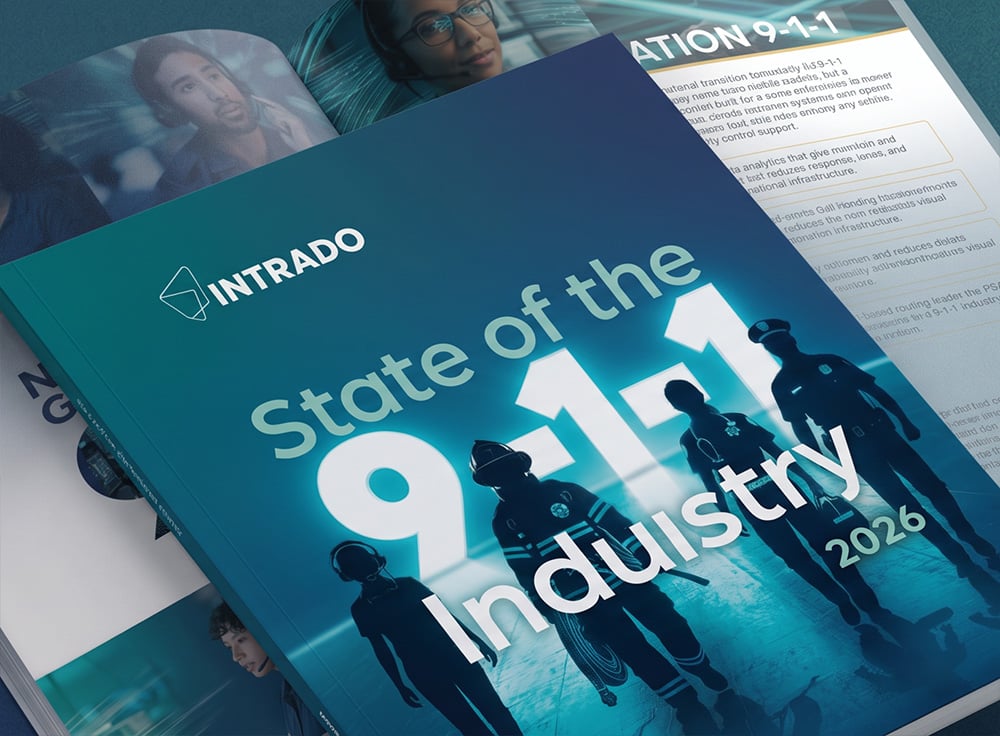
Want the full match report? This is just the highlight reel; our full 2026 State of the Industry Report covers Canada and Mexico's 9-1-1 systems in a lot more depth, plus the international roaming challenges in full. Download the report.
Intrado. Always there in an emergency.
Contact Us
Thank you for your submission
