






E9-1-1 Regulations

E9-1-1 Compliance Starts With Confidence

Intrado’s enterprise E9-1-1 solutions help organizations with multi-line telephone systems (MLTS) comply with evolving regulations while protecting employees and reducing risk. With end-to-end reliability, we make E9-1-1 compliance clear and dependable.

Talk to an Expert
compliance enterprise E911

FCC FAQ Sheet

Is Your Enterprise E9-1-1 Compliant?

The Federal Communications Commission (FCC) adopted rules to implement Kari’s Law and Section 506 of RAY BAUM’s Act to help Americans reach 9-1-1 services more quickly. These new federal regulatory obligations mean that enterprises with MLTS are required to provide:

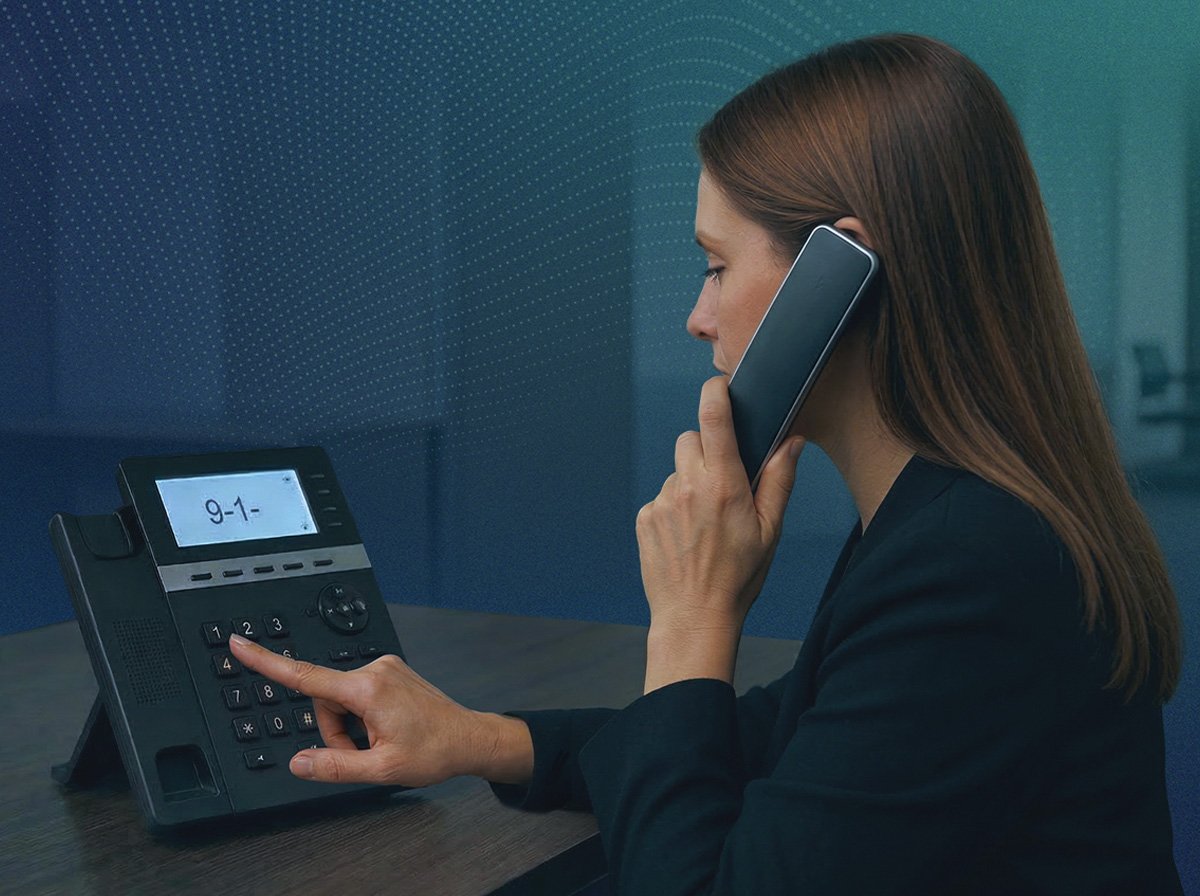
  • Direct access to 9-1-1 without dialing any prefix, postfix, or trunk access code.

  • Notification to on-site security whenever 9-1-1 is dialed within the enterprise.

  • A dispatchable location with every 9-1-1 call.

The FCC issued a downloadable FAQ sheet to help relevant parties better understand the scope, intent and meaning of these laws as they apply to MLTS systems. Read our blog to learn more or download the FAQ sheet now.

The Deadline

When To Be Compliant

For enterprises with fixed MLTS phones, these changes took effect in January 2021.

Organizations with non-fixed MLTS devices on- and off-premises had until January 6, 2022 to comply with these regulatory obligations.

All requirements apply to MLTS manufactured, imported, offered for first sale or lease, first sold or leased, or installed after February 16, 2020.

intrado_compliance5
intrado_compliance11

Kari’s Law

Direct Dialing and Notifications

As required by Kari’s Law:

  • Users must be able to dial 9-1-1 directly from any device capable of making calls (dialing a 9, a prefix, postfix, or trunk access code is not acceptable).

  • On-site security or staff must get notified of 9-1-1 calls that take place within the workplace.

This especially impacts:

  • Companies with multiple office locations, including financial institutions, medical facilities, etc.

  • School campuses (public and private, K12 through higher education).

RAY BAUM’s Act

Providing a “Dispatchable Location”

RAY BAUM’s Act requires organizations to provide a “dispatchable location” whenever a 9-1-1 call is placed, including:

  • Street address

  • Building

  • Floor

  • Suite or room number(s)

This provision helps to ensure emergency responders have the information they need to find the exact location of a person who has dialed 9-1-1.

intrado_compliance10
intrado_compliance6

FCC VoIP E9-1-1 Regulations

Regulations for Interconnected VoIP Provider

The FCC has established a set of rules and E9-1-1 regulations that require interconnected VoIP (Voice over Internet Protocol) service providers to deliver E9-1-1 services to their subscribers. Interconnected VoIP service providers connect the IP realm and the Public Switched Telephone Network (PSTN), allowing subscribers to benefit from increased efficiency by routing calls over the internet.

The E9-1-1 regulations established by the FCC are mandatory for all interconnected VoIP service providers, and are designed to protect the safety of VoIP users who expect that when they dial 9-1-1, emergency responders know exactly where they are and will quickly arrive on-scene. The Commission’s 9-1-1 rules can be found in 47 CFR Part 9, Electronic Code of Federal Regulations (eCFR) and those specific to Interconnected VoIP services are found in Subpart D.

State MLTS E9-1-1 Laws & Regulations

Navigating State-Level Requirements

Many states have laws and regulations regarding 9-1-1 service as it applies to enterprises. These laws and regulations vary from basic guidelines concerning access to 9-1-1 and dialing prefixes, to specific requirements regarding notifications and detailed location delivery to the public safety answering point (PSAP).

Enterprises operating in states that have implemented or are considering 9-1-1 regulations should work with their regulatory advisors and legal teams to ensure that they have taken adequate measures to ensure compliance with any applicable or pending 9-1-1 legislation.

compliance
intrado_compliance12

CRTC E9-1-1 Regulations

Requirements for VoIP Service Providers in Canada

The Canadian Radio-Television and Telecommunications Commission (CRTC) has established Decision 2007-44, which requires VoIP service providers to make 9-1-1 services available to their fixed/non-native and nomadic VoIP subscribers.

The CRTC decision obliges VoIP service providers to deliver all 9-1-1 calls to the appropriate PSAP using the zero-dialed emergency call routing service (0-ECRS), rather than PSAP low-priority lines.

Adherence to this decision is mandatory for all VoIP service providers offering services in Canada, and is designed to protect the safety of VoIP users who expect that when they dial 9-1-1, they will quickly be connected to qualified emergency responders.

State-by-State E9-1-1 Legislation

Access general summaries of applicable E9-1-1 laws and regulations by state, as well as links to the regulations themselves. These summaries should not be taken as official records of state law, but are instead for informational use only. 

Related Resources

E9-1-1 Compliance, Covered

Intrado's solutions cover the 9-1-1 continuum from end to end, with products for organizations of every type. Get in touch with our team to request an assessment or learn more about E9-1-1 compliance, emergency location management, call routing, and notifications.

Talk to an Expert